
Jeremy Parkinson A life in sailing
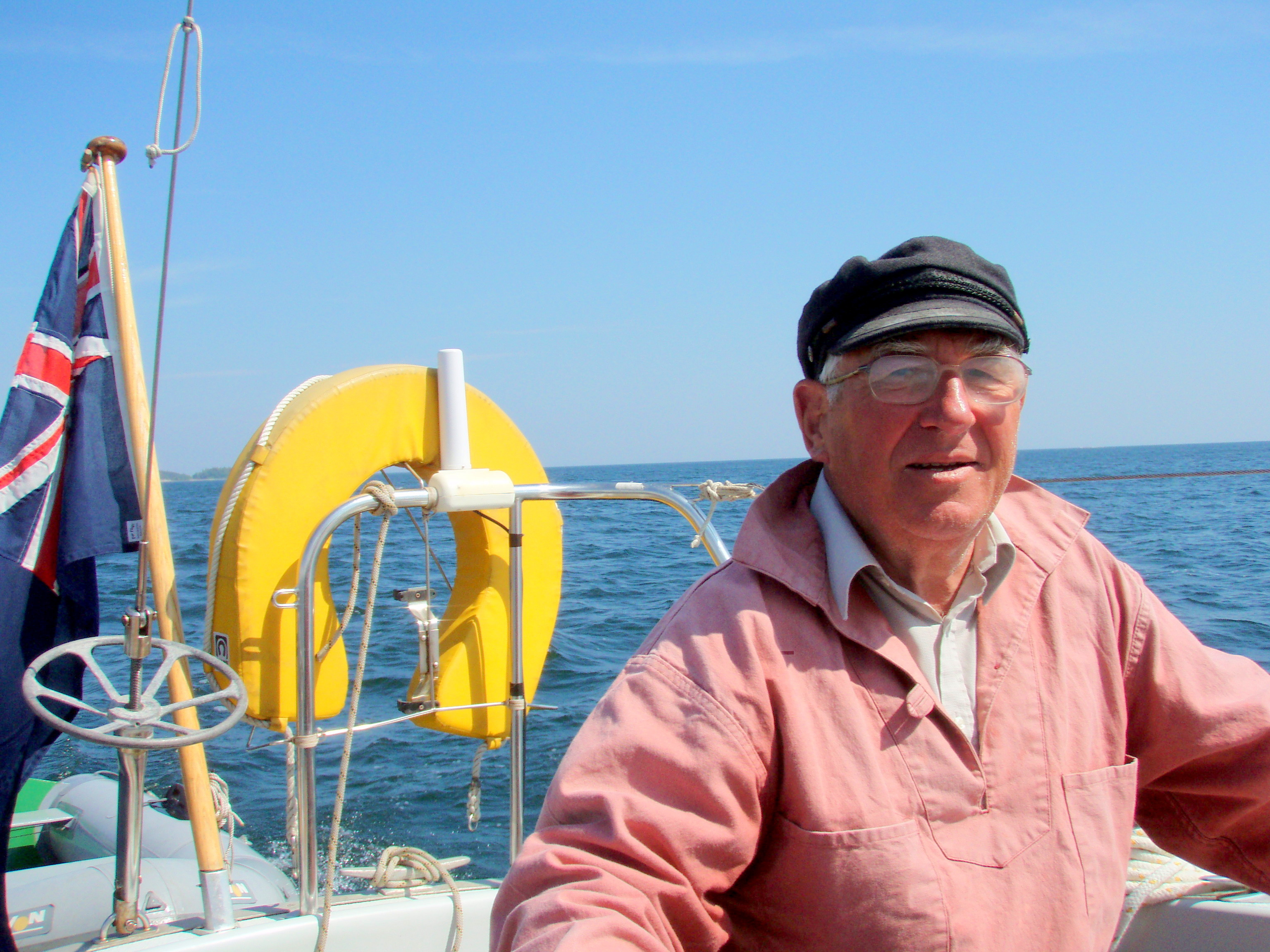
Published 17:30 on 31 Dec 2025 by Stephen Fraser
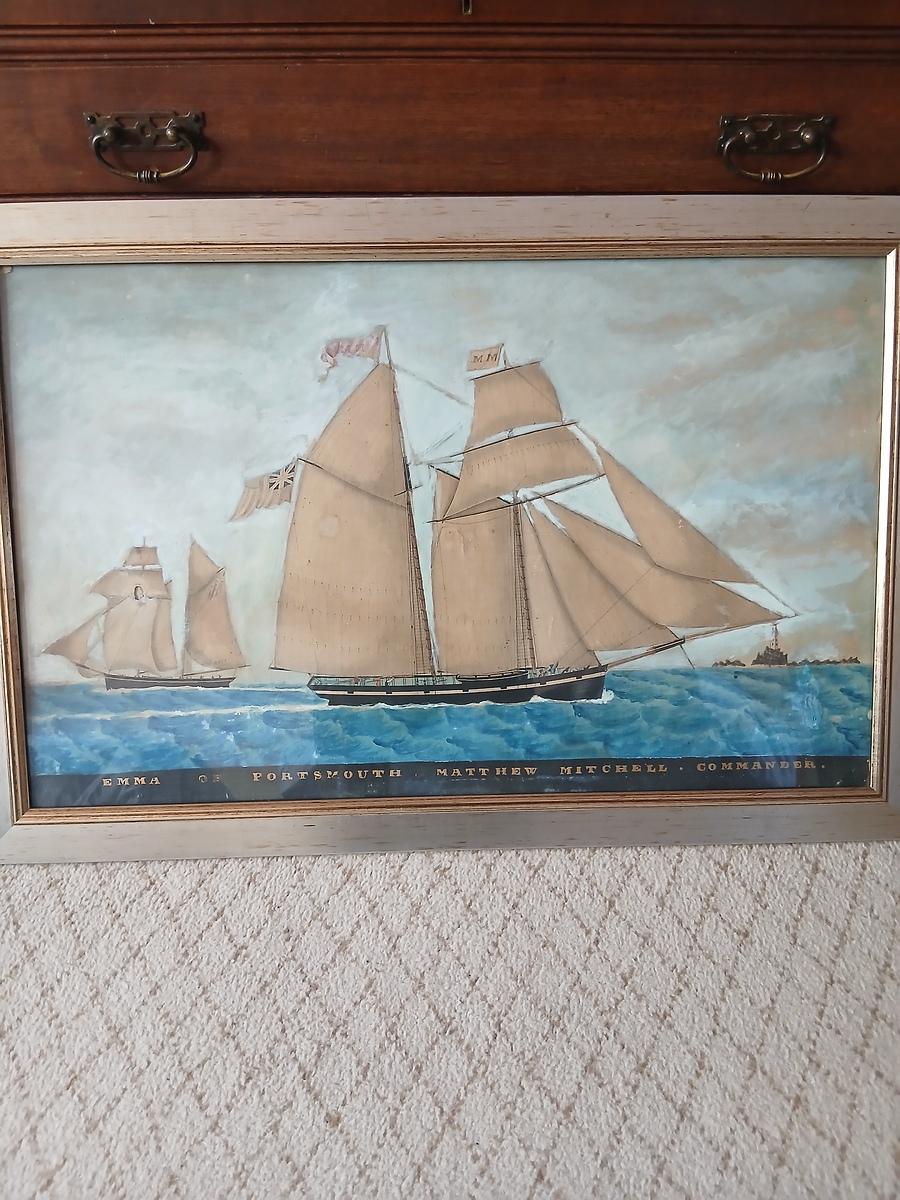
It probably helps to have a sea captain among your forebears; a painting on the wall at Jeremy’s house shows the ‘Emma of Portsmouth’, a trading schooner belonging to Jeremy’s great-grandfather, Captain Matthew Mitchell. It may also have been the fact that the Parkinson family were neighbours of the legendary Club member Freda Bratby which brought them to join WSC in 1952, with Jeremy as a cadet member. His father, who was also a doctor, bought ¾ decked sailing boat ‘Bungy II’, which Jeremy remembers having a very small rudder, making arrival back on the moorings a source of entertainment for members in the clubhouse. This led to Dr Parkinson commissioning a Falcon, ‘Saker’, in 1954, at a cost of £137 10s, from Bussell’s, who were still building boats at that time.
By this time Jeremy, having had his first taste of keelboat sailing in ‘Ultimus’ was already exploring further afield, across Lyme Bay in 1953 and then in 1954 to Amsterdam, with friends of members Norman and Emmy Meech, and in 1955 to North Brittany.
This already ambitious programme was interrupted by education and medical training in Birmingham, though Jeremy soon returned to Weymouth to practise alongside his father, and to continue his sailing at the club. In 1960 he had an Enterprise, Whisper, though the arrival of children put an end to sailing for a couple of years. In 1963 Jeremy bought a Falcon ‘Standgale’, though by 1972 he was back cruising the West Country and across the Channel, now in ‘Amarantha’, a 22-ft Pandora.
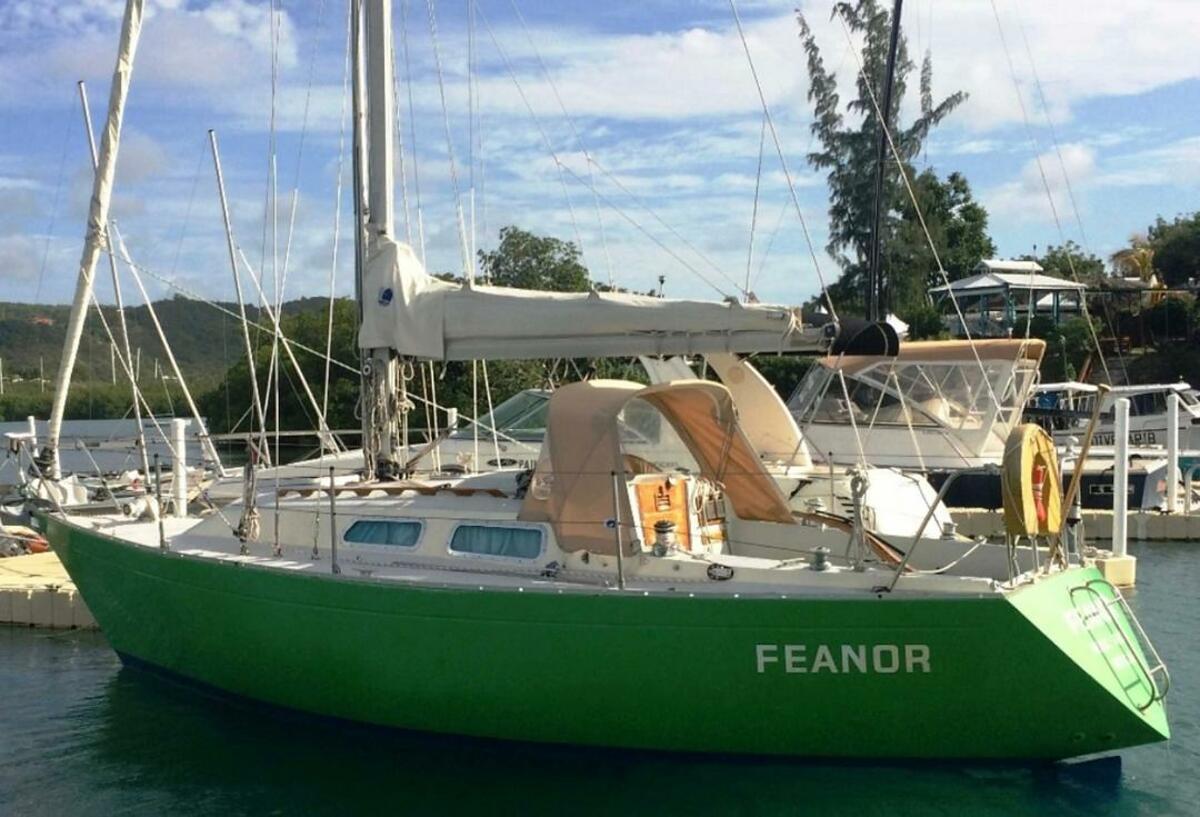
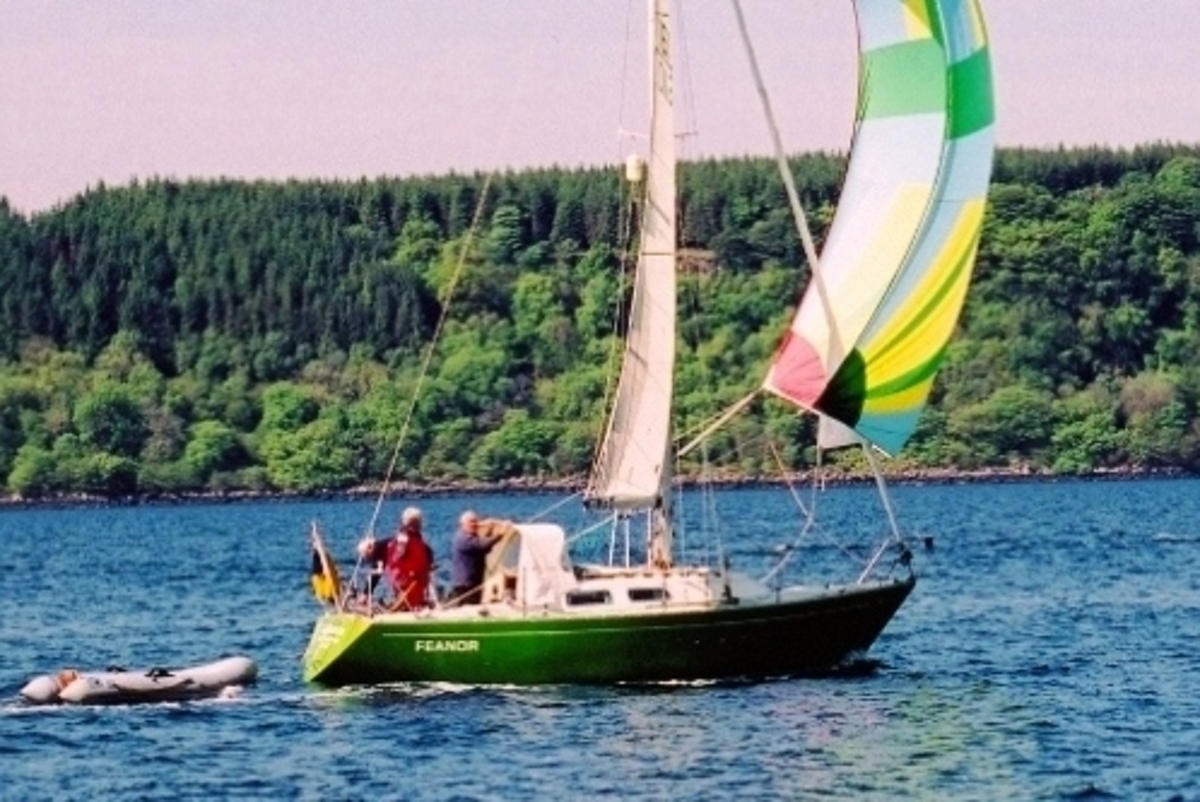
There followed in 1976 a Quarter-tonner, ‘Humdinger’, which Jeremy bought as a kit to finish himself, and a Squib, ‘Avocet’, in 1979. Jeremy then moved on to purchase a Sadler 25 from the Buglers, which he renamed Jalina, though after having admired a prototype while cruising in Brittany, Jeremy sold his Sadler and in 1988, with the help of an inheritance, purchased the Contessa 28, ‘Feanor’, the green boat which most members will remember.
Jeremy’s retirement from medical practice in 1995 paved the way for further, and increasingly ambitious, cruises, with an ever-changing crew made up of friends and fellow club members. The first of these was to the west coast of Scotland in 1996, where Jeremy spent six weeks based out of Plockton, on the mainland opposite Skye, and including the outer Hebrides. The following year ‘Feanor’ was off to southern Norway via Ipswich, crossing the North Sea in four days, and going via Oslo, the Göta canal to Stockholm and the east coast of Sweden, then back to Weymouth.
In 1998 ‘Feanor’ set off south for the Mediterranean; Jeremy had been invited to join the Royal Cruising Club by Bill Ludlow, and the shape of the next few years would include RCC rallies where possible. Having visited Corsica and Sardinia, Jeremy wintered the boat in a yard which was part of the former naval dockyard in Malta. This led to a trip to Greece and the Ionian in 1999, where there were very few marinas, much to the disappointment of Jeremy’s crews though, as he pointed out, they always came back for another trip.
In 2000 Jeremy’s personal odyssey continued with a voyage through the Corinth canal to the Aegean and southern Turkey, as far as Gochek, where there was a RCC rally, then back along the north coast of Crete and across the Aegean again to Jeremy’s favourite yard, the Cleopatra yard at Levkas for the winter. This led to a trip round the Adriatic to Croatia in 2001, much quieter than today after the war there, with no charter boats. The highlight of the trip was a week in Venice at a marina opposite St Mark’s Square, thanks to a contact in the RCC and a strategic ‘mazzetta’ of 100 euros!
2002 saw ‘Feanor’ heading north up the Aegean as far as Istambul, where Jeremy found the Dardanelles current slow going, and the last leg was made by car. The return trip took in Malta and the west coast of Italy, including a week in Rome, then on to the Rhone, where, after his experience in the Dardanelles, Jeremy fitted a three-bladed prop borrowed from Mike Jury to tackle the current. Following an engine problem, ‘Feanor’ wintered at Macon in the canals, which made the change of plan for the 2003 season easy. Instead of heading back via Paris, Jeremy chose to head north via the Canal de lEst and the Moselle and Rhine rivers in order to take part in the RCC reception at Nordeney, celebrating the centenary of the publication of that staple of cruising sailors, ‘The Riddle of the Sands’ by Erskine Childers who had been expelled from the RCC for smuggling guns to the IRA in his yacht ‘Asgard’ while flying the RCC burgee!
This made a return to Weymouth via the East Coast English ports an obvious plan, taking in the iconic stops at Pin Mill and Burnham – ’there’s lots of mud up there’ remarked Jeremy, recalling how a crew member fell in and had to go back to change on board before being allowed in the restaurant!
There followed three further trips to the Baltic, partly in order to update sections of the third edition of the RCC Baltic Sea pilot book. Jeremy recalls the slow going in 2004, mostly against a NE wiind which lasted for 8 weeks! That year he left ‘Feanor’ in Finland, in winter conditions which required all water to be removed from the boat; even the small amount left in the bottom of the loo proved problematic, making a change of seals necessary the following Spring!
Jeremy wanted to get as far as St Petersburg, though this proved to be possible only by train, and again with the assistance of an RCC representative to help with the bureaucracy. Jeremy and his crew, Joan Whyte and Morris, were able to stay in a flat which had belonged to no less a celebrity than Tchaikovsky, and managed to do justice to this emblematic destination during their stay. The return journey was via the south coast of Finland and the Stockholm archipelago; having been delayed by headwinds going east, Jeremy was disappointed to find that heading down-Channel in the prevailing SW winds caused similar delays. It was fortunate that at this stage Jeremy’s crew was his brother, who could leave and rejoin the boat easily as required on the way west.
Following a final trip in 2006 to Denmark, also for The Baltic Sea book updating process, Jeremy was asked to edit the RCC North Biscay to Spain pilot book, called Atlantic France, which required some 3 or 4 trips further in to South Brittany, including the ports in the notorious south-east corner of Biscay. Jeremy’s last trip to N Brittany in 2016 concluded an extraordinary cruising career spanning some 60 years; having sold ‘Feanor’ in the same year, Jeremy completed the circle with the purchase of ‘Bluebelle’, the classic dayboat in which he has continued to enjoy sailing with family and friends in Weymouth Bay.
During the 73 years of his membership at WSC, Jeremy has owned 3 racing dinghies, 3 day boats and 4 cruisers, the last, ‘Feanor’ for 29 seasons. Before retiring, Jeremy raced 2 or 3 times a week from 1961 onwards, and there are not many club trophies which do not bear the name of one of his boats! Many club members have Jeremy to thank for the possibility of sharing in his travels, and WSC will always be grateful for his extraordinary contribution to sailing at the club.
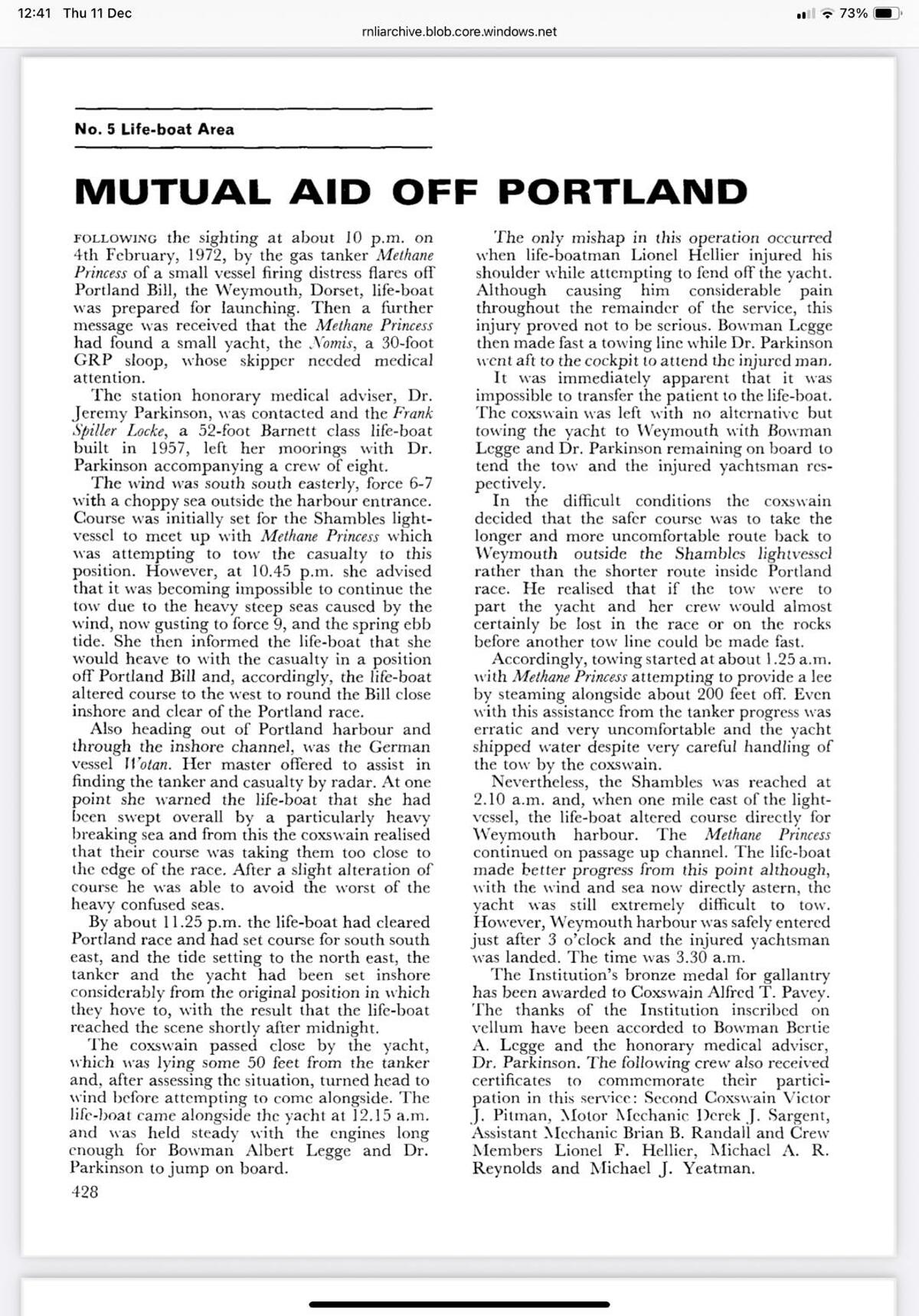
An attached article from 1972 gives details of Jeremy’s commitment to the needs of others at sea, when he took part in a lifeboat rescue in the Channel, jumping aboard a 30ft yacht in appalling conditions to give medical assistance to a crew member, for which Jeremy subsequently received the official thanks of the RNLI inscribed on vellum.
Steve Fraser
Last updated 17:40 on 31 December 2025